BEGIN:VCALENDAR
VERSION:2.0
CALSCALE:GREGORIAN
METHOD:PUBLISH
PRODID://LPCA//527978
BEGIN:VEVENT
DTSTAMP:20260820T154233
VTIMEZONE:America/New_York
DTSTART:20260911T160000Z
DTEND:20260911T170000Z
UID:527978
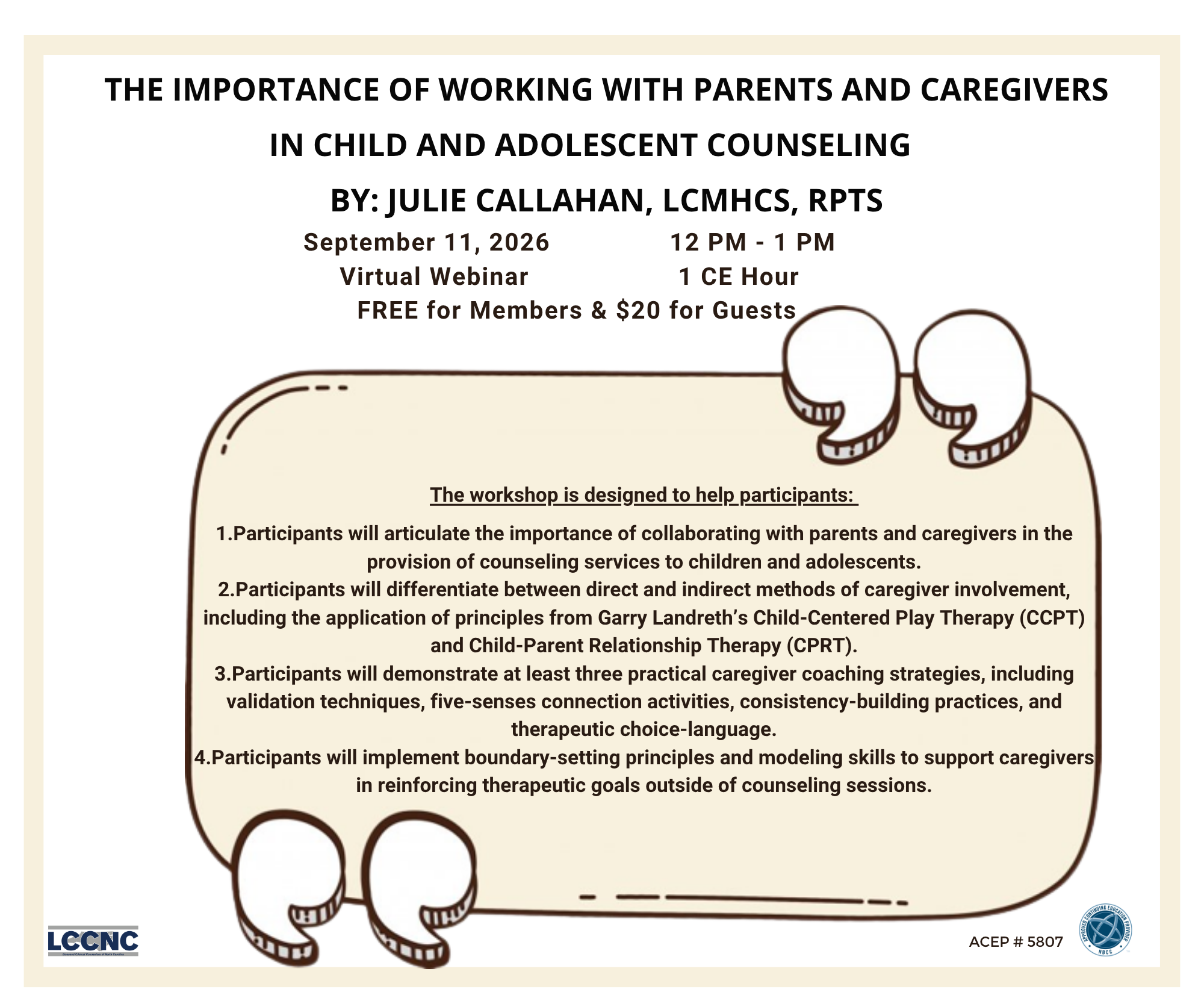
SUMMARY:The Importance of Working with Parents and Caregivers in Child and Adolescent Counseling
LOCATION:ZOOM
DESCRIPTION:The Importance of Working with Parents and Caregivers in Child and Adolescent Counseling \n\n09/11/26 12:00 PM EST\n - 09/11/26 01:00 PM EST\Description:\nThis presentation explores the essential role of collaboration with parents and caregivers in counseling children and adolescents. Effective therapeutic work with young clients depends on active caregiver involvement to support emotional development, reinforce therapeutic skills, and ensure consistency across home, school, and community settings.\n\nWe will review both direct and indirect methods of engaging caregivers, including practical “rules of thumb” from Garry Landreth. Foundational concepts from Child-Centered Play Therapy (CCPT) and Child-Parent Relationship Therapy (CPRT) will also be introduced. The presentation will further emphasize the importance of establishing and maintaining clear therapeutic boundaries to ensure ethical and effective caregiver involvement.\n\nA strong focus will be placed on translating theory into practice. Participants will be introduced to practical tools, including a Five Senses Connection Activity to strengthen caregiver-child attunement, validation techniques to support emotional regulation, consistency practices that promote stability and predictability, and therapeutic choice-language scripts that empower children while maintaining appropriate limits.\n\nParticipants will also engage in experiential learning activities and peer discussion to practice and apply these skills in real time. These interactive components are designed to strengthen confidence in working with caregivers across diverse clinical and educational settings.\n\nPracticing these skills is essential for effective counseling. Therapists must be able to model communication, validation, and boundary-setting strategies for caregivers. When these skills are consistently demonstrated, caregivers are better equipped to implement them at home, extending therapeutic gains beyond the counseling session and improving outcomes for children and adolescents.\n\n\n\Location:\nZOOM\n\n,
X-ALT-DESC;FMTTYPE=text/html:The Importance of Working with Parents and Caregivers in Child and Adolescent Counseling
09/11/26 12:00 PM EST - 09/11/26 01:00 PM EST
Description:
This presentation explores the essential role of collaboration with parents and caregivers in counseling children and adolescents. Effective therapeutic work with young clients depends on active caregiver involvement to support emotional development, reinforce therapeutic skills, and ensure consistency across home, school, and community settings.
We will review both direct and indirect methods of engaging caregivers, including practical “rules of thumb” from Garry Landreth. Foundational concepts from Child-Centered Play Therapy (CCPT) and Child-Parent Relationship Therapy (CPRT) will also be introduced. The presentation will further emphasize the importance of establishing and maintaining clear therapeutic boundaries to ensure ethical and effective caregiver involvement.
A strong focus will be placed on translating theory into practice. Participants will be introduced to practical tools, including a Five Senses Connection Activity to strengthen caregiver-child attunement, validation techniques to support emotional regulation, consistency practices that promote stability and predictability, and therapeutic choice-language scripts that empower children while maintaining appropriate limits.
Participants will also engage in experiential learning activities and peer discussion to practice and apply these skills in real time. These interactive components are designed to strengthen confidence in working with caregivers across diverse clinical and educational settings.
Practicing these skills is essential for effective counseling. Therapists must be able to model communication, validation, and boundary-setting strategies for caregivers. When these skills are consistently demonstrated, caregivers are better equipped to implement them at home, extending therapeutic gains beyond the counseling session and improving outcomes for children and adolescents.
Location:
ZOOM
,
PRIORITY:3
TRANSP:TRANSPARENT
BEGIN:VALARM
TRIGGER:-PT5M
ACTION:DISPLAY
DESCRIPTION:Reminder
END:VALARM
END:VEVENT
END:VCALENDAR